The Architecture of Engagement: Sequencing Visual Content to Guide Users Through Online Casino Platforms
Written by Jonas Sullivan · Jun 13, 2026

The Architecture of Engagement: Sequencing Visual Content to Guide Users Through Online Casino Platforms
Online casino platforms organize visual elements in deliberate sequences that move users from initial entry points toward specific game selections and account features. This approach relies on layered image placements, color shifts, and progressive reveals that align with established patterns in digital interface design. Researchers at various institutions have documented how such arrangements influence navigation paths, with data from multiple studies showing consistent reductions in bounce rates when sequences follow logical visual progressions.
Core Principles Behind Visual Sequencing
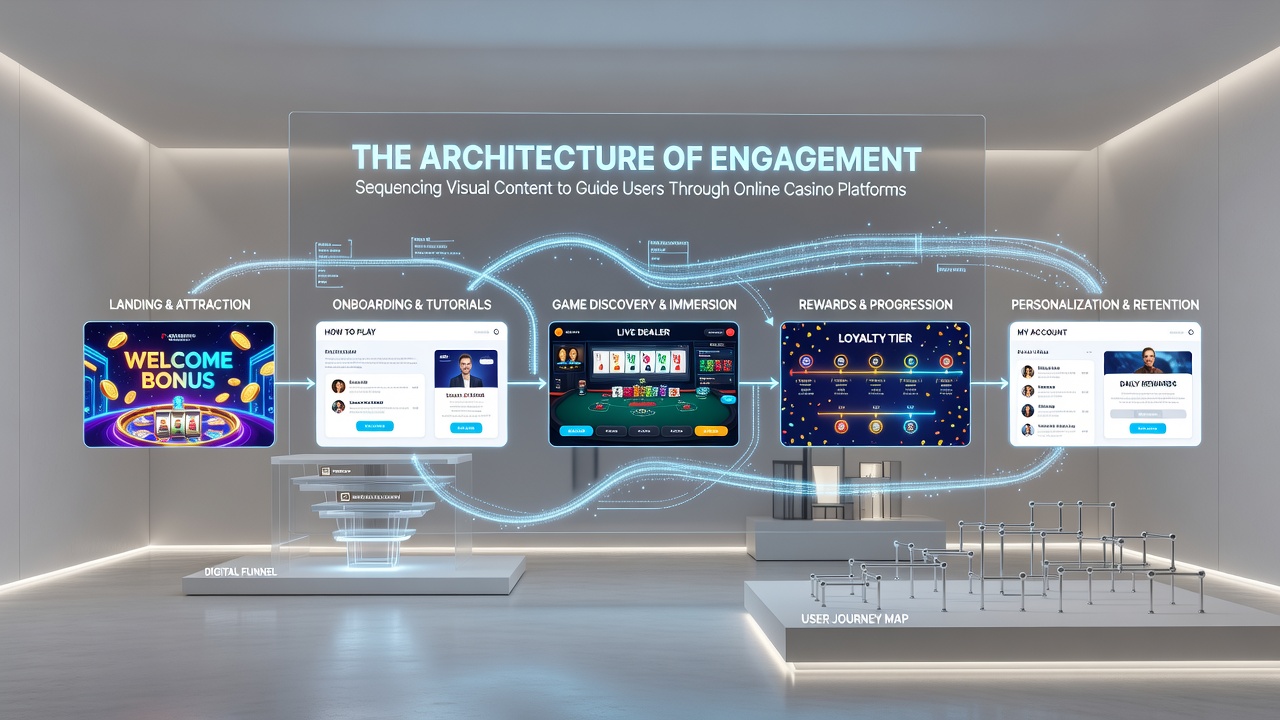
Design teams arrange homepage elements so that large hero images appear first, followed by category thumbnails that narrow options without overwhelming the viewer. The sequence typically begins with broad promotional banners that highlight current events or featured titles, then transitions into grid layouts that sort games by type or popularity metrics. According to a 2025 report issued by the Canadian Gaming Association, platforms employing these ordered progressions recorded average session extensions of 12 to 18 percent compared with layouts that presented all content simultaneously.
Color temperature changes play a supporting role in the sequence, shifting from cooler tones in introductory sections to warmer accents near call-to-action buttons. Observers note that this gradual adjustment helps maintain visual continuity while signaling movement through different content layers. Data collected across European operators indicates that users who encounter such color-guided paths complete registration flows at higher rates than those exposed to static color schemes.
Homepage Structures and Initial User Direction
Entry pages function as gateways where sequenced visuals establish the first set of choices available to visitors. Large static or animated images occupy the upper portion of the screen, directing attention downward through subsequent rows that introduce slot categories, table game selections, and live dealer options. These rows appear in a fixed order that prioritizes high-traffic titles before less common variants, a pattern confirmed in analytics shared by several major operators during 2025 industry conferences.
Thumbnail sizes decrease as the page scrolls, creating a visual funnel that subtly encourages continued exploration rather than immediate departure. Navigation menus positioned alongside these sequences remain secondary until users reach lower sections, ensuring primary focus stays on the image progression. Figures released by the Australian Gambling Research Centre reveal that sites applying this hierarchy experienced measurable increases in page depth metrics over a twelve-month tracking period.
Progressive Galleries and Thematic Transitions
Once users move past the homepage, platforms introduce gallery-style sections that expand on initial themes through additional image sequences. These galleries present games in thematic clusters, such as adventure-themed slots or classic table variants, with each cluster introduced by a distinct visual header. The transition between clusters uses consistent spacing and subtle divider elements that maintain flow without abrupt visual breaks.
Users encounter filter options only after the primary sequence has established context, allowing them to refine choices within an already structured environment. Studies conducted by academic teams at several North American universities have tracked how this delayed presentation of controls correlates with longer dwell times on individual game preview pages. Platforms that integrate these mechanisms report that visitors explore an average of three to four additional categories before selecting a title.
Regulatory Context and Platform Adjustments
Operators adjust sequencing practices to align with regional requirements that govern promotional visibility and responsible gaming prompts. These adjustments often involve inserting mandatory information panels at specific points in the visual flow rather than altering the overall sequence order. In June 2026, several jurisdictions plan to implement updated display standards that will require clearer placement of age verification elements within the initial sequence stages.
Industry associations across multiple continents continue to collect comparative data on how these regulatory insertions affect user progression rates. The patterns observed so far suggest that when information panels receive consistent styling with surrounding visuals, navigation continuity remains largely intact while compliance objectives are met.
Conclusion
Sequenced visual content serves as a structural framework that organizes user movement through online casino platforms from entry to game selection. The combination of ordered image placement, supporting color shifts, and delayed filter presentation creates pathways that multiple data sources link to extended engagement metrics. As platforms evolve ahead of upcoming regulatory updates in 2026, the core sequencing principles documented in current research provide the foundation for continued refinement of these digital environments.