Visual Cascades: Tracing Layered Gallery Sequences Across Casino Resource Homepages
Written by Felix Schmitz · Jul 15, 2026
Visual Cascades: Tracing Layered Gallery Sequences Across Casino Resource Homepages
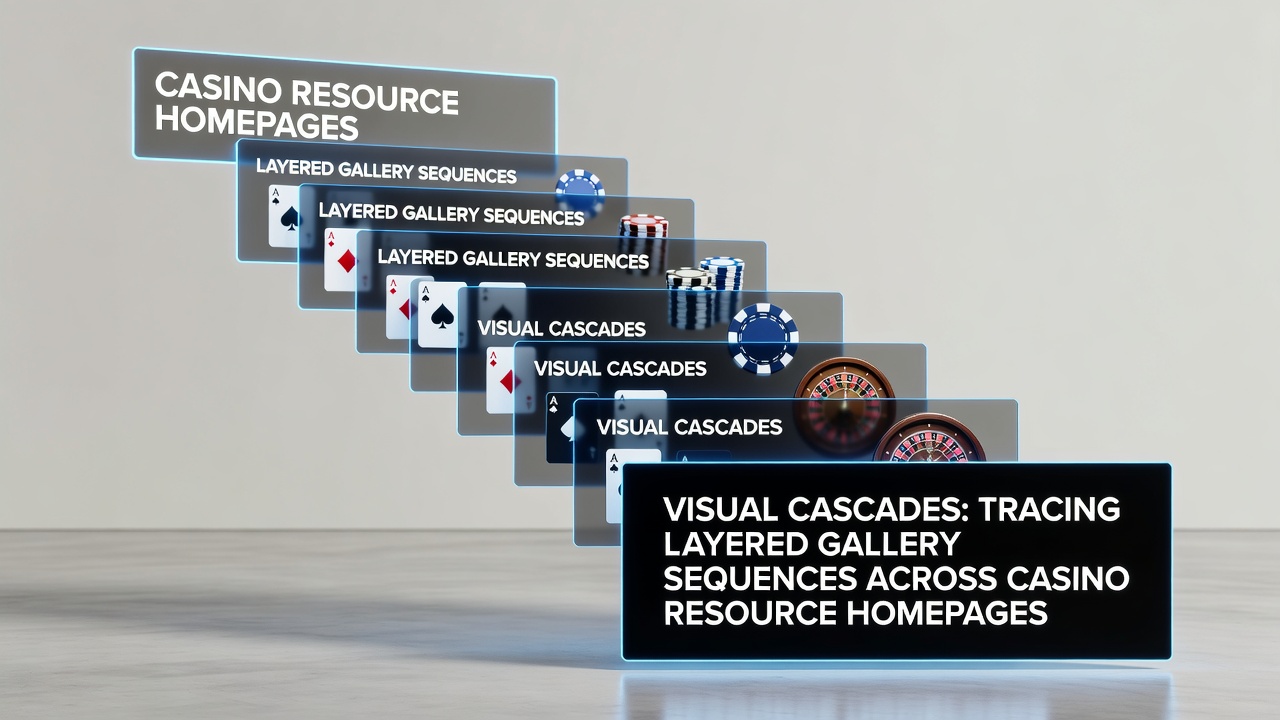
Visual cascades represent structured sequences of images arranged in layered progressions on casino resource homepages, and these systems guide users through thematic sections by presenting visual content in ordered stages that build upon prior displays. Researchers have documented how such sequences integrate with navigation anchors to direct exploration patterns across digital platforms focused on gaming destinations.
Mechanics of Layered Gallery Progressions
Homepage structures in casino resources often employ cascading image series that unfold through user interactions or timed reveals, and these sequences connect initial visual anchors to deeper thematic galleries while maintaining consistent design elements across pages. Data from industry reports shows that operators deploy these progressions to organize content into stages, where each layer highlights specific aspects such as venue layouts or gaming options before advancing to related visuals.
Those who analyze digital interfaces note that the sequences rely on grid-based or scroll-triggered layouts, and the systems allow simultaneous display of multiple image tiers that users can expand sequentially. Studies indicate that this approach aligns with broader patterns in online resource design, where progressive visuals reduce navigation friction by presenting information in digestible visual blocks rather than isolated elements.
Integration with Homepage Anchors and Exploration Paths
Casino resource platforms frequently position primary anchors at the top of homepages, and these elements serve as entry points that initiate the cascade toward layered galleries below. Observers have tracked how clicking an anchor triggers the reveal of subsequent image sequences, which then link to subpages containing expanded collections of venue photography and related details.
Evidence from user behavior analyses reveals that such integrations shape session durations, because the visual flow encourages continued interaction as each layer provides context for the next. Platforms in various regions apply these techniques uniformly, whereas differences emerge in color schemes and transition speeds based on regional design preferences.
Examples from Established Casino Resource Platforms
Take one platform that structures its homepage around an initial wide banner image followed by a series of stacked galleries, and those sequences progress from broad venue overviews to close-up details of interior spaces. Another resource organizes its content through horizontal scroll elements that cascade vertically upon interaction, connecting high-level navigation to specific thematic progressions covering multiple locations.
Industry documentation shows that these methods appear consistently across sites serving North American and Asian markets, and the sequences adapt to mobile formats by stacking layers vertically to preserve the progression flow. One documented case involved a redesign where sequential galleries replaced static grids, resulting in measurable shifts in page depth metrics tracked through standard analytics tools.

Technical Implementation and Design Patterns
Developers implement these cascades using combinations of CSS transitions and JavaScript event handlers, and the code structures ensure that each image layer loads only after user engagement or viewport detection to optimize performance. Research from academic sources on digital media consumption confirms that such loading strategies maintain engagement by preventing overwhelming initial displays of all content at once.
According to findings published through the American Gaming Association, homepage sequences in gaming-related resources follow repeatable patterns that prioritize thematic consistency, while external factors like device type influence the exact layering depth. Platforms also incorporate accessibility features such as keyboard navigation through the cascades, which extends the sequences to users relying on non-visual input methods.
Regional Variations and Regulatory Context
Resources targeting Canadian markets apply layered sequences that incorporate compliance indicators within the image progressions, whereas Australian platforms emphasize location-specific galleries that cascade toward regulatory summaries. Data compiled by the Australian Gambling Research Centre indicates that these visual structures align with local content requirements without altering the core progression mechanics.
Preparations for updated digital standards scheduled around July 2026 in several jurisdictions have prompted operators to review how their gallery sequences meet evolving accessibility benchmarks, and this process involves testing layered displays across multiple device categories to ensure uninterrupted flow.
Conclusion
Layered gallery sequences continue to define navigation structures on casino resource homepages through their emphasis on progressive visual delivery, and the systems connect initial anchors to expanded content in ways that support structured user exploration. Ongoing technical refinements and regional adaptations maintain these patterns as central components of digital resource design in the sector.